
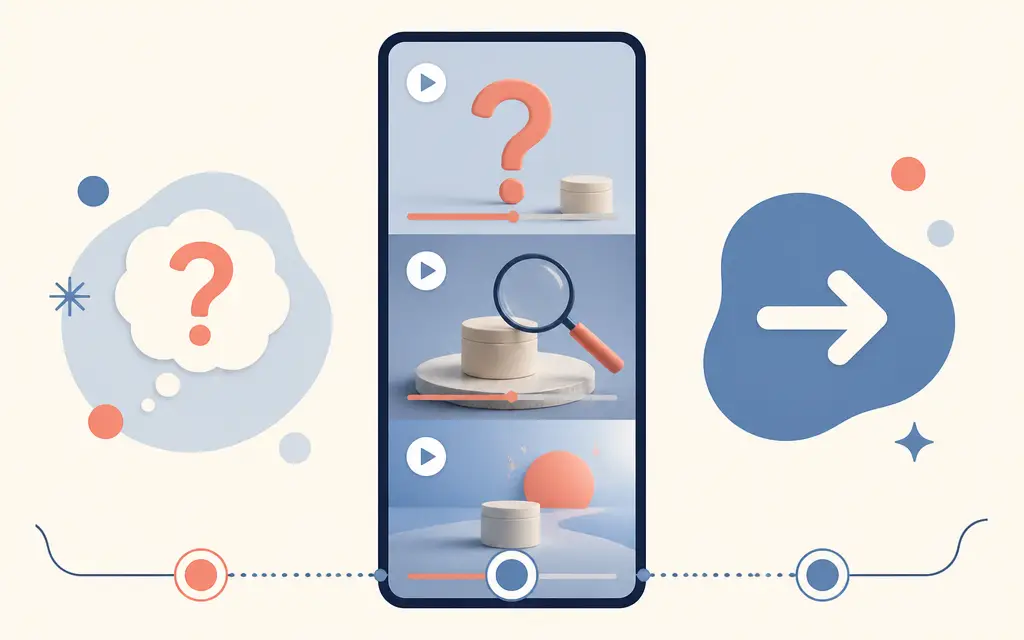
A YouTube Short should use its first three seconds to state the viewer's payoff and show immediate evidence for it. When people can recognize what the video will answer right away, they have a reason to stay for the next moment.
Lead with part of the result, a comparison, or the first visible step instead of relying on a dramatic claim alone. This is not a formula for guaranteed reach; it is a review framework for matching an opening to the subject and audience.
What promise should the opening make?
The opening does not need to summarize the whole video. It needs to make the answer the viewer will receive clear in one line or image. A video about organizing, for example, can show the finished space first and then explain how it was reached.
Keep the question from the title and thumbnail intact. The opening promise is not bait; it is an accurate statement of what the video will actually deliver.
What evidence can you show before making a claim?
Saying that a method is surprising is not evidence on its own. A hand movement, before-and-after view, material, or on-screen result gives the viewer one concrete detail they can understand immediately.
Too much evidence can blur the point on a small screen. Keep one subject and one change in the opening, then move conditions and detail to later scenes.
How do you earn the next moment?
Do not finish the answer in the opening. After showing the result, move naturally to the decision that makes it useful: which order matters, what to avoid, or what changes the outcome. That progression gives the Short a coherent next step.
A reason to continue is context, not withheld information. Check that the video fulfills its early promise while showing why the next step matters.
What should you review after production?
Play the first three seconds without sound. You can see whether the topic and subject are visible without reading every caption and whether the focal point is large enough for a vertical frame. Then turn on sound and check that the first spoken line makes the same promise as the image.
AUTOVID lets creators save recurring Shorts scene structures and subtitle styles as templates, then apply them to a generated script to create an editing starting point. Even with a template, review the promise, evidence, and transition for each subject.
Frequently asked questions
Should I put a lot of text in the first three seconds?
Start by checking whether one key phrase is readable. If the sentence is long, let the image and voice share the meaning and move the conditions to the next scene so the focal point remains clear on mobile.
Should every Short begin with the same hook?
No. A tutorial may work best with a result and first step, a review with a comparison, and a story with a change in situation. Compare openings against each video's promise and audience question instead.